South America
Bolivia
Salt flats, Andean markets and the cheapest travel in South America, all at breathtaking altitude.
Bolivia is the high, wild heart of the continent. Most backpackers cross from Peru via Lake Titicaca, spend a week in La Paz riding the cable cars and cycling the Death Road, then head south through Sucre and Potosí.
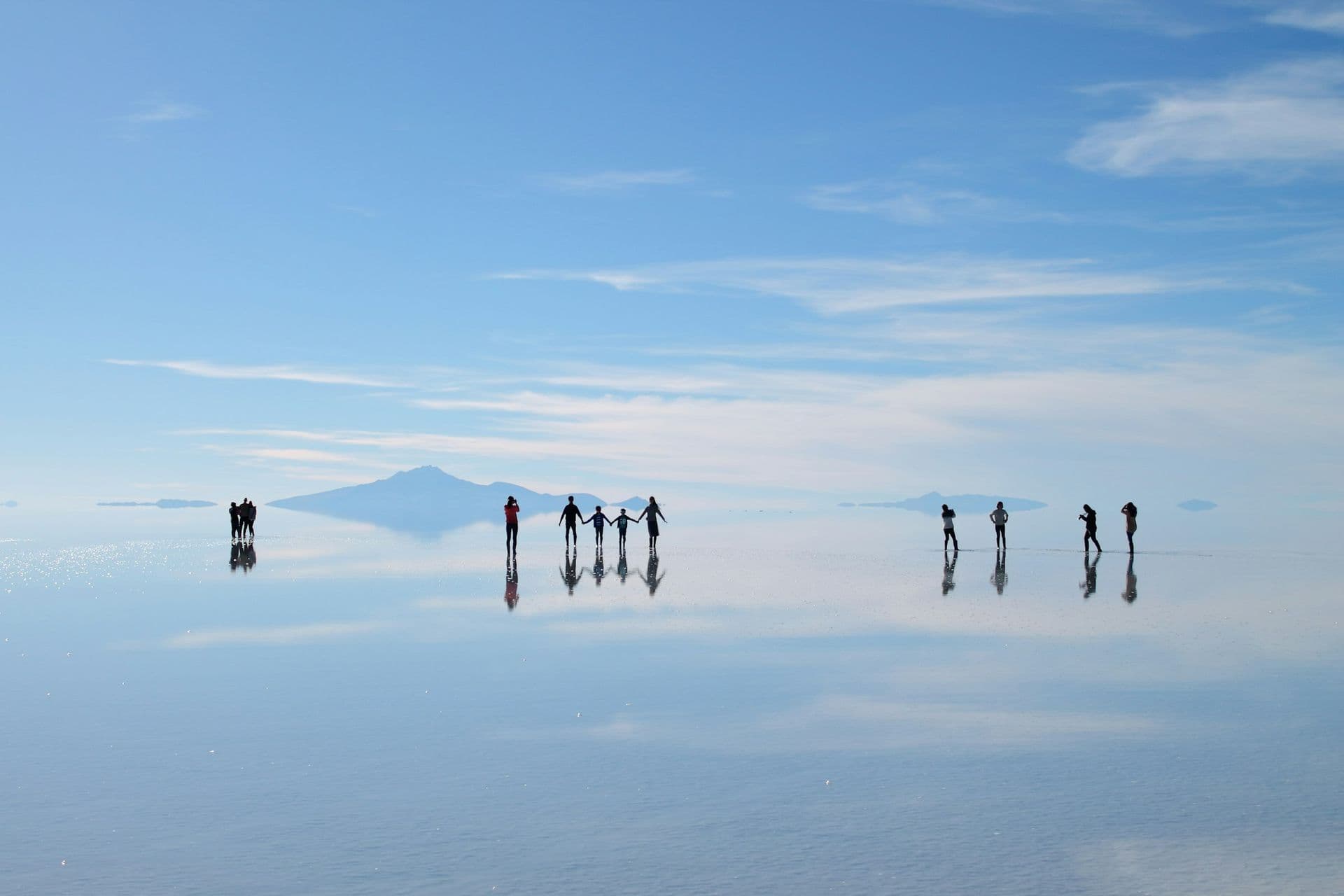
The trip ends for many on a three-day jeep tour across the Salar de Uyuni and the coloured lagoons beyond it. Prices are low, the scenery is huge, and the altitude takes a few days to get used to.
Good to know
- Time zone
- GMT-4
- Plugs
- Types A and C, 230V (some older buildings in La Paz use 115V)
- Emergency numbers
- 110 police, 118 ambulance, 119 fire
- Tap water
- Drink bottled or filtered
- Traffic drives on the
- Right
- Tipping
- Not expected in cheap places, but leave around 10% in sit-down restaurants and tip your salt flats driver and cook.
- SIM cards
- An Entel or Tigo prepaid SIM costs about 10 bolivianos and 50–100 bolivianos covers a few weeks of data; bring your passport to register it.
When to go to Bolivia
Best months to go: May to October. Pick a month to see what it’s like.
Bars show rainfall; numbers are the average daytime high. Amber marks the best months to go.
SeptemberBest time to go
Warming up, with fewer people. A good month to climb Huayna Potosí.
- Daytime high
- 15°C
- Rainfall
- 30 mm
- Crowds
- Busy
| Month | Daytime high | Rainfall | Crowds | Best time to go |
|---|---|---|---|---|
| January | 15°C | 130 mm | Quiet | No |
| February | 15°C | 105 mm | Busy | No |
| March | 15°C | 70 mm | Quiet | No |
| April | 15°C | 30 mm | Quiet | No |
| May | 14°C | 10 mm | Busy | Yes |
| June | 13°C | 5 mm | Busy | Yes |
| July | 13°C | 8 mm | Peak season | Yes |
| August | 14°C | 13 mm | Peak season | Yes |
| September | 15°C | 30 mm | Busy | Yes |
| October | 16°C | 40 mm | Busy | Yes |
| November | 17°C | 50 mm | Quiet | No |
| December | 16°C | 95 mm | Quiet | No |
What Bolivia costs
Work out a budget for your trip, then check what everyday things cost.
$462for 14 days, about $33 a day (Bs 3,220 in total)
| Cost | Per day | For the trip | |
|---|---|---|---|
| Bed | $10 | $140 | |
| Food and drink | $8 | $112 | |
| Getting around | $5 | $70 | |
| Things to do | $8 | $112 | |
| Everything else | $2 | $28 |
Per person, in US dollars. Flights and insurance not included.
What things cost
- Almuerzo, a set lunchBs 20, about $2.87
- Salteña from a street stallBs 10, about $1.44
- Bottle of Paceña beer in a barBs 20, about $2.87
- Hostel dorm bed in La PazBs 80, about $11
- Cable car ride in La PazBs 3, about $0.43
- Overnight bus, La Paz to UyuniBs 150, about $22
- Three-day salt flats tour from UyuniBs 1,200, about $172
Routes through Bolivia
Where to go and how long to stay, for the time you’ve got.
14 nights, 7 stops
The classic route south from Lake Titicaca through La Paz and the colonial cities, finishing with a jeep tour across the salt flats.
Copacabana
1 night
A lakeside town with trout for lunch and sunset from Cerro Calvario.
Isla del Sol
1 night
Walk the island past Inca ruins and stay in a simple guesthouse.
La Paz
4 nights
Ride the cable cars, visit the Witches’ Market and cycle the Death Road.
Sucre
3 nights
White colonial streets, dinosaur footprints and a relaxed pace.
Potosí
2 nights
A silver mining city at 4,000 metres. Tour the Cerro Rico mines with a former miner.
Uyuni
1 night
A windy town at the edge of the salt flats. Book your tour and stock up on water and snacks.
Salar de Uyuni tour
2 nights
Three days by 4x4 across the salt, past flamingo lagoons and geysers to the Chilean border.
Getting around
Bus
$10–30 for a long overnight trip
Buses are cheap but roads can be rough. Pay a little more for a cama seat and a reputable company such as Todo Turismo.
Jeep / 4x4
$150–250 for a three-day salt flats tour
Tours of the Salar de Uyuni run in 4x4s with six passengers. Ask other travellers for recent recommendations.
Flight
$50–120 one way
BoA and EcoJet link La Paz with Sucre, Uyuni, Rurrenabaque and Santa Cruz, saving long days on the road.
Cable car
Under $1 a ride
Mi Teleférico’s colour-coded lines are the best way around La Paz and El Alto, with huge views.
Boat
About $5 each way
Boats leave Copacabana for Isla del Sol in the morning and come back in the afternoon.
What to eat and drink
Salteña
A baked pastry filled with a juicy meat stew. Eat it upright in the morning without spilling.
Bs 10, about $1.44
Api con pastel
A hot, thick purple corn drink with a cheese-filled fried pastry. A cold-morning breakfast.
Bs 10, about $1.44
Sopa de maní
Peanut soup with pasta and chips on top, the usual starter of a set lunch.
Bs 15, about $2.16
Silpancho
A thin breaded beef steak over rice and potatoes, topped with a fried egg. From Cochabamba.
Bs 30, about $4.31
Pique macho
A heap of beef, sausage, chips, egg and chilli, made for sharing.
Bs 60, about $8.62
Chuflay
Singani, the local grape brandy, mixed with ginger ale or lemonade and lime.
Bs 25, about $3.59
Say it like a local
A few words go a long way. Tap “Hear it” to listen, where your browser can.
Hello
Hola
Say it like: oh-lah
Thank you
Gracias
Say it like: grah-see-ahs
How much is it?
¿Cuánto es?
Say it like: kwan-toh ess
Can you do it cheaper?
¿Me hace una rebajita?
Say it like: meh ah-seh oo-nah reh-bah-hee-tah
Can I have a little extra? (to a market seller)
Caserita, ¿me da una yapita?
Say it like: kah-seh-ree-tah, meh dah oo-nah yah-pee-tah
Where is the bus station?
¿Dónde está la terminal?
Say it like: don-deh es-tah lah ter-mee-nal
The bill, please
La cuenta, por favor
Say it like: lah kwen-tah por fah-vor
Cheers!
¡Salud!
Say it like: sah-lood
Questions travellers ask
How bad is the altitude?
La Paz sits at around 3,600 metres and the airport in El Alto at over 4,000, so most people feel it. Take the first two days slowly, drink plenty of water and try coca tea. Coming overland from Peru helps you adjust.
Is the Death Road safe?
It is much safer since traffic moved to a new road, but people still get hurt. Pay for a company with good bikes, full-face helmets and working brakes rather than the cheapest deal.
When can I see the salt flats mirror?
The reflection needs a thin layer of rainwater, usually from January to March. In the dry months the salt is white and cracked, and tours can reach the southern lagoons more easily.
Should I bring US dollars?
Yes. ATMs can run dry or limit withdrawals, and the exchange rate has been volatile, so crisp US dollar notes are useful to change at casas de cambio. Check the current rate before you go.
What are bloqueos?
Road blockades are a common form of protest and can stop buses for a day or more. Keep a buffer day before flights and check local news before long journeys.