North America
Costa Rica
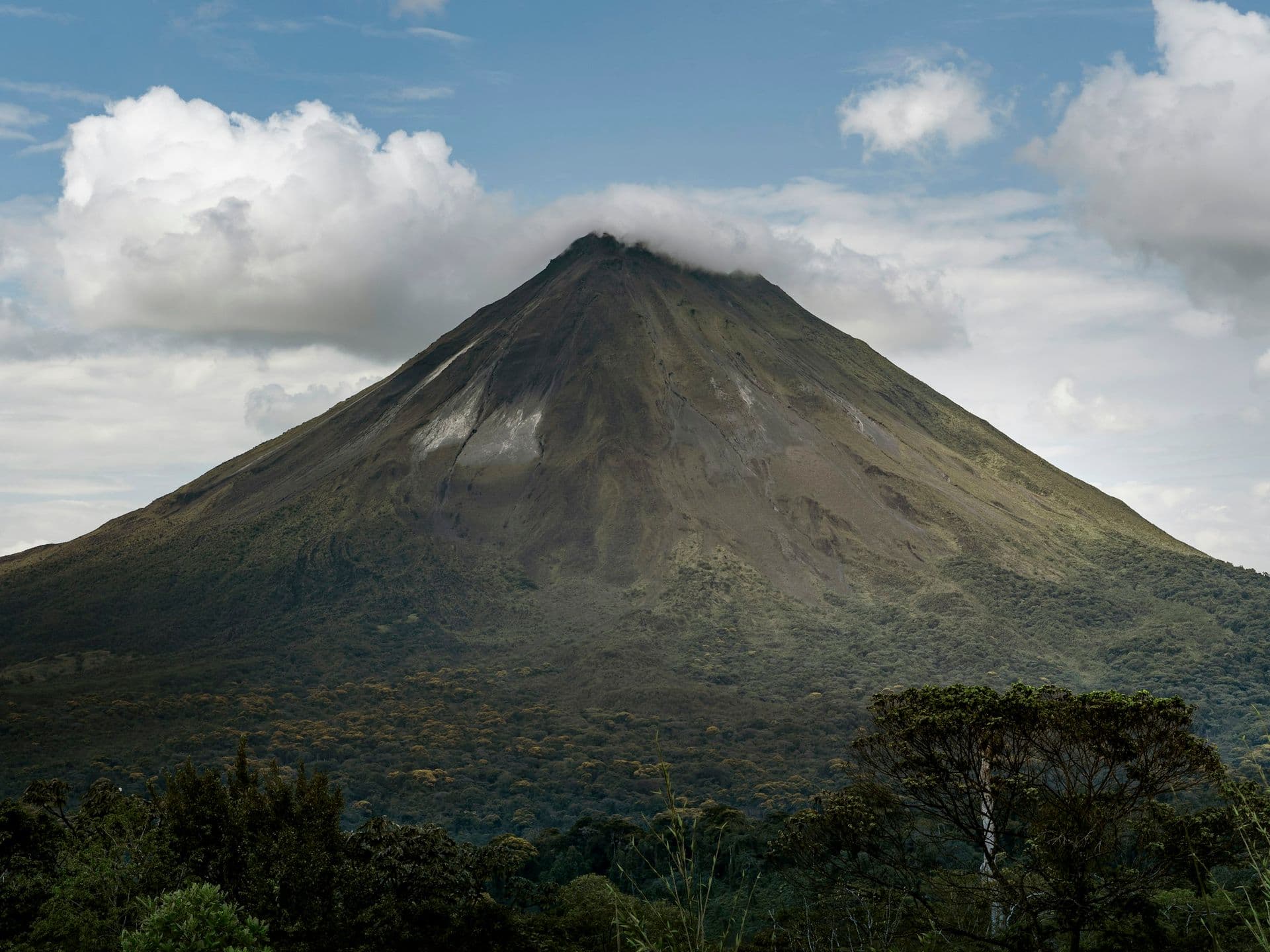
Sloths, volcanoes and surf breaks on two coasts, with pura vida as the national motto.
Costa Rica is small, safe and easy to travel, with a quarter of the country protected as parks and reserves. The classic loop runs from the Arenal Volcano to the cloud forest of Monteverde, then down to the beaches of the Pacific coast.
It is the most expensive country in Central America, so eat at local sodas and use public buses where you can. On the Caribbean side, Puerto Viejo and Tortuguero have a slower, reggae-flavoured pace.
Good to know
- Time zone
- GMT-6
- Plugs
- Types A and B, 120V
- Emergency numbers
- 911 for police, ambulance and fire
- Tap water
- Safe to drink
- Traffic drives on the
- Right
- Tipping
- Restaurants add a 10% service charge by law, so only tip extra for good guides and drivers.
- SIM cards
- A Kölbi or Claro prepaid SIM costs about 3,000 colones and 5,000–10,000 colones buys a few weeks of data; bring your passport.
When to go to Costa Rica
Best months to go: December to April. Pick a month to see what it’s like.
Bars show rainfall; numbers are the average daytime high. Amber marks the best months to go.
September
Very wet on the Pacific side, but the Caribbean coast has its best weather.
- Daytime high
- 30°C
- Rainfall
- 350 mm
- Crowds
- Quiet
| Month | Daytime high | Rainfall | Crowds | Best time to go |
|---|---|---|---|---|
| January | 33°C | 3 mm | Peak season | Yes |
| February | 34°C | 3 mm | Busy | Yes |
| March | 35°C | 5 mm | Busy | Yes |
| April | 35°C | 20 mm | Busy | Yes |
| May | 33°C | 200 mm | Quiet | No |
| June | 31°C | 250 mm | Quiet | No |
| July | 31°C | 150 mm | Busy | No |
| August | 31°C | 200 mm | Quiet | No |
| September | 30°C | 350 mm | Quiet | No |
| October | 30°C | 320 mm | Quiet | No |
| November | 31°C | 90 mm | Quiet | No |
| December | 32°C | 15 mm | Peak season | Yes |
What Costa Rica costs
Work out a budget for your trip, then check what everyday things cost.
$840for 14 days, about $60 a day (₡424,000 in total)
| Cost | Per day | For the trip | |
|---|---|---|---|
| Bed | $18 | $252 | |
| Food and drink | $15 | $210 | |
| Getting around | $8 | $112 | |
| Things to do | $15 | $210 | |
| Everything else | $4 | $56 |
Per person, in US dollars. Flights and insurance not included.
What things cost
- Casado at a soda₡4,500, about $8.91
- Gallo pinto breakfast₡3,500, about $6.93
- Bottle of Imperial beer in a bar₡1,800, about $3.56
- Fresh coconut from a roadside stall₡1,000, about $1.98
- Hostel dorm bed in La Fortuna₡10,000, about $20
- Public bus, San José to La Fortuna₡3,000, about $5.94
- Ferry from Puntarenas to Paquera, on foot₡1,600, about $3.17
Routes through Costa Rica
Where to go and how long to stay, for the time you’ve got.
14 nights, 6 stops
The classic loop of volcano, cloud forest and Pacific beaches, starting and ending in San José.
San José
1 night
A night near the airport or in Barrio Escalante before heading north.
La Fortuna
3 nights
Hike the lava fields below Arenal and soak in free hot springs.
Monteverde
3 nights
Hanging bridges, zip lines and a night walk to find sleeping sloths and tarantulas.
Santa Teresa
3 nights
Surf lessons, yoga and sunsets on the Nicoya Peninsula.
Manuel Antonio
3 nights
Monkeys and sloths in the national park, with beaches inside it.
San José
1 night
The Central Market and a last casado before flying out.
Getting around
Bus
$2–10 for most trips
Public buses are cheap and go almost everywhere, but routes often mean changing in San José.
Minibus
$50–70 a trip
Shared tourist shuttles from companies like Interbus pick up at your hostel and save hours.
Boat
$20–40 a trip
Boats are the only way into Tortuguero and the easiest way to Drake Bay. The jeep-boat-jeep route links La Fortuna and Monteverde.
Ferry
About $3 on foot
Car ferries cross the Gulf of Nicoya from Puntarenas to Paquera for Santa Teresa and Montezuma.
Private car
$50–90 a day with insurance
A 4x4 gives you freedom, but mandatory insurance often doubles the online price. Watch for river crossings on dirt roads.
What to eat and drink
Gallo pinto
Rice and black beans fried with onion and Salsa Lizano, with eggs and plantain for breakfast.
₡3,500, about $6.93
Casado
The everyday lunch plate: rice, beans, salad, plantain and chicken, fish or beef.
₡4,500, about $8.91
Chifrijo
A bar snack of beans, rice, crispy pork and pico de gallo, eaten with tortilla chips.
₡4,000, about $7.92
Rice and beans
The Caribbean version, cooked in coconut milk and served with spicy chicken.
₡6,000, about $12
Ceviche
White fish cured in lime with coriander and pepper, sold on the beach and in sodas.
₡4,000, about $7.92
Batido
A fruit shake made with water or milk, from mango to cas, a sour guava.
₡2,000, about $3.96
Say it like a local
A few words go a long way. Tap “Hear it” to listen, where your browser can.
Hello, all good (the national greeting)
¡Pura vida!
Say it like: poo-rah vee-dah
Thank you
Gracias
Say it like: grah-see-ahs
You’re welcome
Con gusto
Say it like: kon goos-toh
How much is it?
¿Cuánto cuesta?
Say it like: kwan-toh kwes-tah
What’s up, mate?
¿Qué hay, mae?
Say it like: keh eye, my
That’s great
¡Qué tuanis!
Say it like: keh twah-nees
Where is the bus stop?
¿Dónde está la parada?
Say it like: don-deh es-tah lah pah-rah-dah
The bill, please
La cuenta, por favor
Say it like: lah kwen-tah por fah-vor
Questions travellers ask
Is Costa Rica expensive?
It is the priciest country in Central America, with prices close to the US for tours and hotels. Eat at sodas, cook in hostels and use public buses to keep costs down.
Should I pay in dollars or colones?
Both are widely accepted and cards work almost everywhere. Pay in colones at sodas and on buses, as the dollar rate you get in shops is often poor.
Is the rainy season worth it?
Yes, if you are flexible. Mornings are usually sunny, prices drop and the forests are at their greenest. Avoid the Pacific side in September and October, when the Caribbean coast is at its best.
Do I need a guide in the national parks?
You can walk most trails alone, but a guide with a telescope spots far more wildlife. Corcovado requires a certified guide by law.
Do I need to hire a car?
No. Buses and shuttles cover the main route. A car helps on the Nicoya Peninsula and in the south, but insurance and fuel add up quickly.